Driveway Cost Guide & Free Quotes
Not sure what your new driveway will cost? Use our free calculator to get a quick estimate, read our full cost guide, then compare quotes from vetted local installers. No obligation to go ahead.
Get Your Free Driveway Quotes
Free · No obligation · Response in 24 hours
Driveway Cost at a Glance
Average UK prices per m² and for a standard 50m² drive including basic groundwork. Click any material for the full breakdown.
| Material | £ / m² | Typical 50m² drive |
|---|---|---|
| Resin | £70–£130 | £3,500–£6,500 |
| Block Paving | £75–£140 | £3,500–£7,000 |
| Concrete | £60–£115 | £3,000–£5,750 |
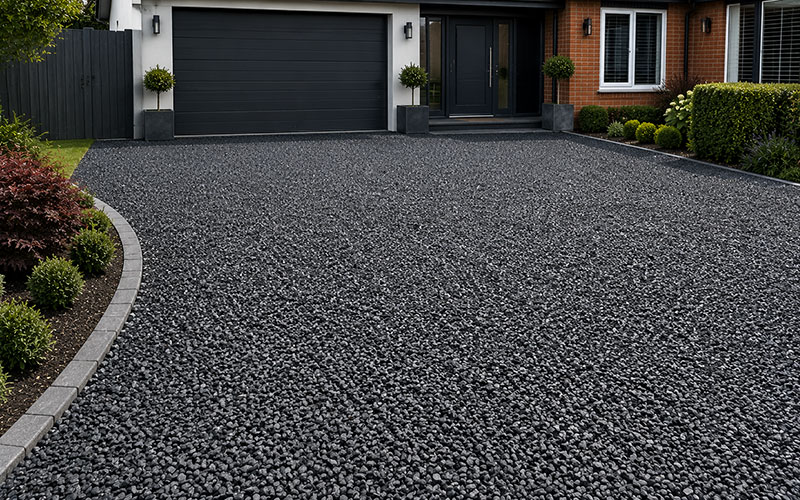
| Gravel | £25–£60 | £1,250–£3,000 |
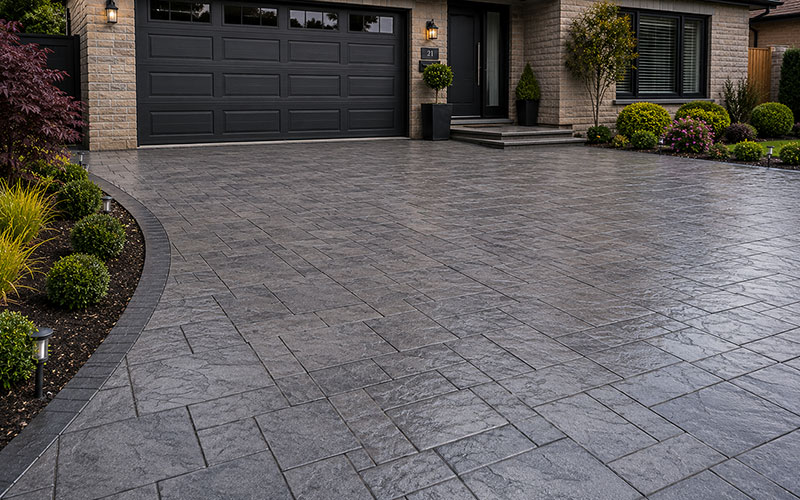
| Pattern Imprinted | £80–£130 | £4,000–£6,500 |
| Tarmac | £45–£90 | £2,250–£4,500 |
* Costs include groundwork. Prices vary by region.
What actually changes the price
The biggest cost factor. Smaller driveways often cost more per m² because of fixed setup work.
Your choice of material has a big impact on price from affordable gravel to premium natural stone.
Digging out the area, laying the sub-base and removing waste all affect the final cost.
Driveways over 5m² may need extra drainage if water would otherwise run onto the road.
Prices are usually higher in London and the South East than in the North and the Midlands.
Breaking out old concrete or blocks adds £15–£25/m² in skip fees.
Driveway Cost Calculator
Answer a few quick questions about your driveway and we will give you a reliable estimation based on current UK pricing so you know roughly what you need to budget before you even speak to a driveway contractor. No email required.
- ✓ Sense-check installer quotes
- ✓ Based on real UK driveway pricing data
- ✓ No registration required
The calculator is an approximate guide to get you started. Always shop around and get 3+ real quotes from approved local installers before you agree to anything.
Indicative estimate only. Actual prices depend on your driveway, ground conditions and installer.
Driveway Cost: A Complete UK Guide
A new driveway is one of the major upgrades you can make to a standard UK home. It's also one of the hardest things to budget for properly as quotes may differ so much from one to the next.
In this guide we’ll explain what UK homeowners actually pay in 2026, why quotes differ so much and how to ensure that you are comparing like for like.
A new driveway in 2026 costs between £3,000 and £6,000 on average for a standard area of between 40 and 60m². You can get basic gravel drives for under £2,000. Premium natural stone can cost more than £9,000. The number differs significantly depending on location, ground condition, material choice and drainage needs.
Typical driveway prices by material
For a standard 40 to 60m² UK driveway, the budget range is between £2,000 to £6,500 including groundwork.
- Gravel: £1,250 to £2,750, the cheapest option
- Tarmac: £2,250 to £4,000
- Concrete: £2,500 to £5,000
- Resin and block paving: £2,000 to £6,500, the two most requested materials in the UK, depending on size and pattern complexity
- Pattern imprinted concrete: £4,000 to £7,000
- Natural stone or premium finishes: £9,000 or more on larger jobs
Why the material isn't the biggest factor
The material is not the most significant aspect of your final price and the most important factor is actually the groundwork. For example, if two homeowners who pick the same material and have same sized driveway, will still see more than £1,000 price difference due to the fact that one driveway requires major excavation and sub-base work and the other does not.
Most cost guides you see online ignore this detail altogether, which is exactly why a generic "per m²" figure very rarely matches the quote that you get from driveway contractors.
When to budget towards the higher end
Budget towards the higher end of any range if:
- Your existing drive needs breaking out and removing
- You have tight access to your property
- Labour and disposal costs are well above the UK average if you are in London or the South East.
Timing is also an important cost factor as spring and early summer tend to be the busiest seasons for installers, so prices may be higher than usual and wait time can be longer during those months. If you book the job during autumn or winter, it can be in your favour for both price and availability.
Factors that affect driveway costs
You will see that driveway quotes are more fluctuating than any other home renovation project because usually it's not just one thing that makes up the final cost and rather a number of things stacked on each other.
Size isn't priced in a straight line. Smaller drives tend to be higher rate per square metre, as fixed costs such as delivery and minimum callout charges are spread over less area.
Depth of excavation and groundwork are most important. Every driveway needs a sub-base underneath to prevent it from cracking or sinking under the heavy weight of a car. Poor drainage, clay soil or an uneven base means more digging out and more material going back in and all that cost gets added before the surface material is even touched.
Cost of removing the old surface adds up fast. Old tarmac, concrete or cracked block paving has to be broken down first, then loaded and removed and it is one of the most underestimated costs in DIY budgeting.
Material grade can vary within a material, not only between them. Resin, block paving or stone can vary several times in cost between a basic and premium version for the same footprint.
Most driveways over 5m² that do not drain naturally to a permeable area have a legal requirement to be drainage and SuDS compliant and keep in mind that it is not an optional extra that you can skip. Non-penetrant drives generally require a soakaway or a pervious surface. This is part of a compliant quote and a cheaper quote might have left it out.
Labour costs fluctuate by region. Generally speaking for the same job, London and the South East are well above the North, Wales, Scotland and the Midlands in terms of costs.
Access is the one wild card. One that equipment can pull straight up to is quicker and cheaper to set up than one behind a narrow side passage or up a slope.
The cost of labour is normally higher than the cost of materials on the final bill. That is why two quotes using the same materials can be very different. It's usually about crew size, time or how much manual labour the site requires, not the price of the surface itself.
Hidden costs to budget for
There is actually one common reason many driveway projects end up costing more than what you expected. Homeowners price the material and stop there. That’s usually not the full cost and there are a few other things.
Old driveway removal: typically £300-£1000. This includes tearing out, loading and disposing of the existing surface which is likely to be priced at around £10 to £20 per m² depending on what is being broken out. Block paving and gravel are easier to clear than tarmac and concrete.
Edging and kerbing: usually £15 to £35 per linear metre. Most surfaces need a good edge restraint to prevent the material from spreading over time, especially gravel and resin. At the bottom is concrete edging. Brick or granite kerbing for a premium finish pushes the cost towards the top of the range.
Drainage and soakaways: typically £1,000 to £2,500 but can be more on difficult ground, where a proper soakaway needs to be installed. This is genuinely required by law in most non-permeable cases, not a nice to have, and it's one of the easiest costs for a cheaper quote to have quietly left out.
Dropped kerb access: Check your local council's current charges. If you need a new dropped kerb to access your driveway from the road, this is arranged through your local council and isn't usually included in your installer's quote. Costs vary between councils and are updated from time to time, so it's worth checking the latest fee on your local authority's website before you set your budget.
Gates, lighting and finishing touches can add a lot to the overall look of your driveway, but the cost will depend on what you choose. If you are planning to include them, it's more cost effective to have everything completed during the main installation rather than bringing contractors back at a later date.
Kerb appeal and resale value aren't direct installation costs, but its a good idea to consider them anyway as a new driveway can make a big difference to a property's first impression and it is one of the first things potential buyers notice. If you are thinking about selling in the next few years, you should definitely spend a little more and that can pay off in the future.
Planning permission: Check the latest Planning Portal fees if permission is required. Most permeable driveways do not need planning permission but it may be required for non-permeable surfaces that don't provide suitable drainage or for properties in conservation areas.
VAT is one thing that you can forget while comparing quotes. Most installers will include VAT in their prices, but it is always worth checking before you make a comparison. A quote without VAT may seem a lot cheaper at first glance, even if the final amount you pay may be very similar.
Maintenance over time: Some driveway materials are more maintenance intensive than others. Gravel may need topping up occasionally and resin, block paving and pattern imprinted concrete can all benefit from periodic sealing. Maintenance could cost from £200 to £500 every 3 to 5 years depending on the material.
Workmanship guarantees aren't always included and you should not assume that they will be part of every quote. Reputable installers mostly offer a written guarantee covering issues such as settlement, cracking or drainage problems for a set number of years. Make sure to ask about guarantees included in the quotes.
Online guides including this one are a great place to start, but they can only give you a realistic price range. The final cost depends on details that can only become clear once an installer has visited your property and inspected every aspect of your driveway.
Before you contact an installer
Use the calculator on this page to get a rough estimate before requesting quotes. Our calculator is designed to give you a realistic price range based on your driveway size, chosen material and your location.
While you're comparing quotes
Get at least three written quotes. This is one of the easiest ways to avoid overpaying and helps you spot quotes that look cheap because something important has been left out, such as removing the old driveway or installing a proper sub-base.
Make sure every quote includes the same work. Ask whether the price covers removing the existing driveway, excavation, sub-base installation, edging, drainage or soakaway work where needed, and VAT. A cheaper quote isn't always better if it leaves out key parts of the job.
Ask what happens if unexpected ground conditions are found. A reputable installer should explain how extra work would be charged before the project begins, whether that's a fixed cost or an agreed adjustment.
Check for insurance and trade memberships. Public liability insurance is essential, and membership of a recognised trade body can provide extra reassurance.
Don't choose a quote on price alone. The cheapest quote isn't always the best value. Focus on what's included and compare like for like before making a decision.
Before you sign anything
Get everything in writing. Your quote should clearly list the materials being used, sub-base depth, drainage details, timescale, payment schedule and anything else that's been agreed. A written quote helps avoid misunderstandings later on.
Be cautious with large deposits. Deposits of more than around a third of the total cost should raise questions. It's also worth asking to see examples of recent local work or speaking to previous customers. Reputable installers are usually happy to provide references and show examples of completed driveways.
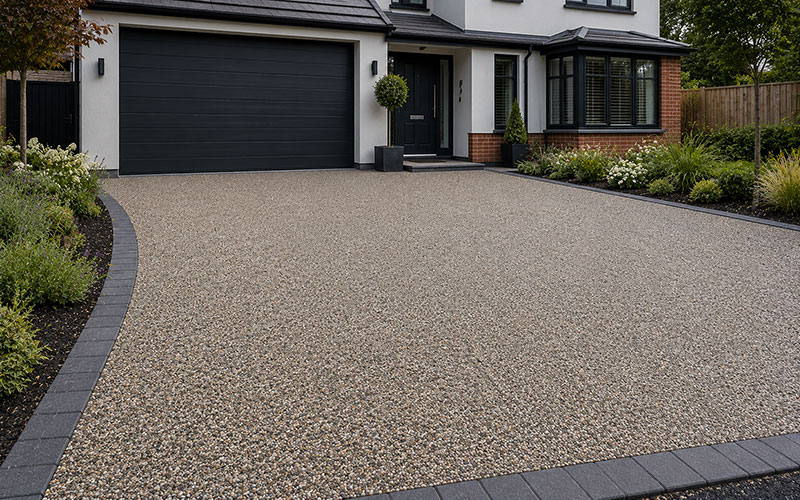
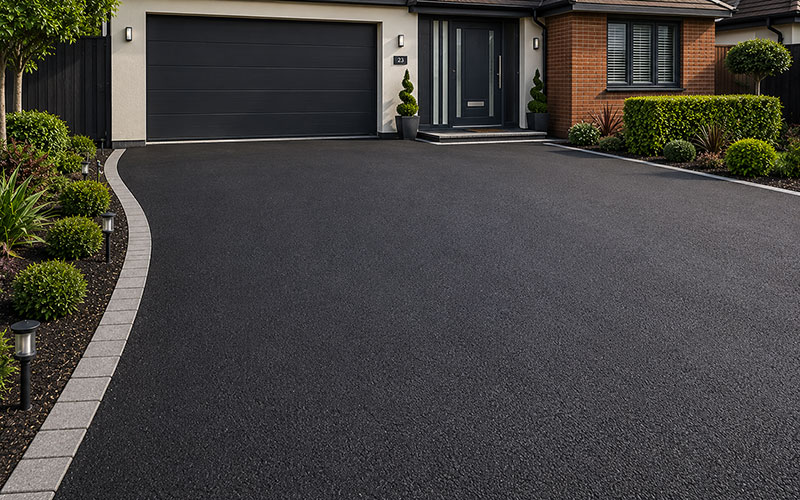
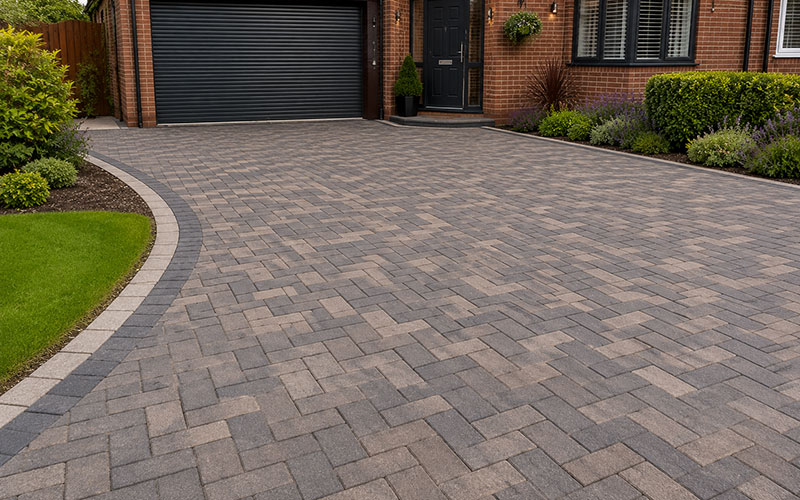
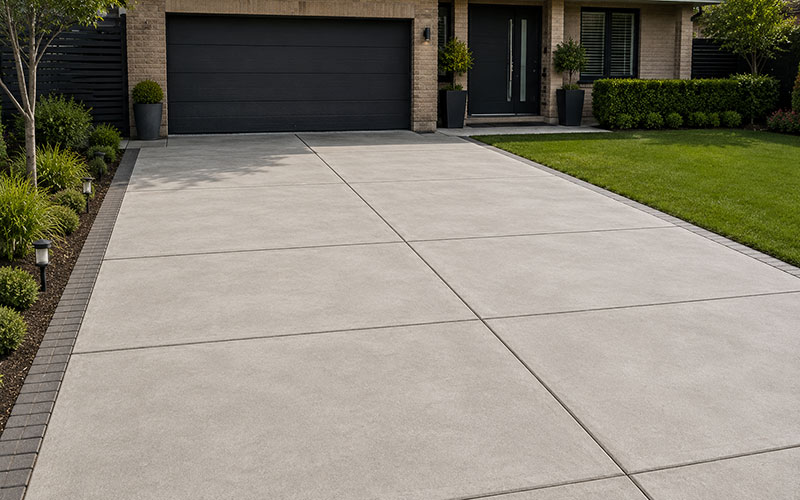
Driveway Cost by Material Type
Explore detailed breakdowns for the most common driveway materials in the UK.
Common questions
Find the right driveway installer
Tell us what you need. We'll connect you with trusted local installers.
Your driveway type, size and postcode.
Up to 4 trusted driveway specialists in your area.
Review up to 4 written quotes at your own pace.
Accept a quote only if you're happy. No obligation.