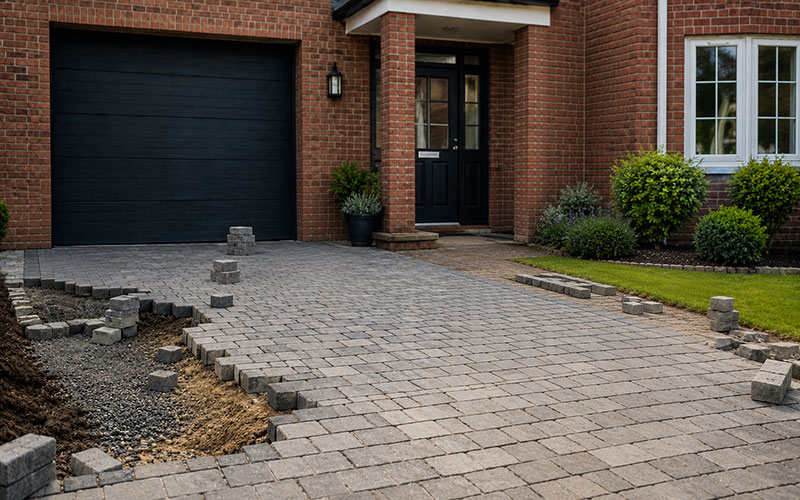
Getting a quote for your driveway is the easy part and most people get hung up on who to actually trust with the job and this is the stage where costly mistakes can happen. A driveway that fails in a few years is almost always down to one thing: the person who put it in cut a corner somewhere that you were unable to see at the time.
Here’s what to actually look for, and what should make you pause.
Start with three quotes, not one
It seems tempting to accept the first quote you receive especially if the price seems reasonable and the installer seems to be friendly but the problem is that you have nothing to compare it with, so it is hard to know whether you are paying a fair price or not.
Getting three quotes is not just about finding the cheapest price but it also helps you see what the job should realistically cost according to your requirements. If two quotes have similar specs mentioned but one is cheaper than the other then you should further investigate the reasons for the price fluctuation.
A very low quote can mean that something has been left out by the contractor. Make sure that you check if things like removing the old driveway, installing the correct sub-base or proper drainage is included in your quotes. These extra things can be mistakenly overlooked until the actual work starts and your costs start exceeding then the quote you got.
Make sure every quote covers the same ground
Not every quote includes the same work and that is the reason why comparing prices isn’t always straightforward. Before making a decision, ask exactly what is included and make sure that following things are covered:
- Removal and disposal of your existing driveway, if needed.
- Full excavation and installation of a proper sub-base.
- Edging or kerbing
- Drainage or a soakaway, where required.
- VAT
A cheaper quote doesn’t always give the better value because if some of these items have been left out, you will still have to pay for them later during the driveway installation.
The sub-base question is the one that matters most
People often focus on the driveway surface only because it is the part they are going to see every day but in reality, the sub-base is just as important.
Before agreeing to hire any contractor, ask them about the material they will use underneath the driveway and how deep the sub-base will be. A properly built sub-base helps prevent the driveway from sinking or cracking in the future. If the quote has vague answer, don’t be afraid to ask for more detail.
Ask them to name the actual products they’re using
You should not settle for general terms mentioned in the quote like “resin”, “block paving” or “tarmac”. Always ask the company exactly what products they will be using for your driveway. They should be able to tell you the resin system, block manufacturer or tarmac specification, and not just the type of driveway.
This is very important to ask because the quality can vary a lot between product manufacturers. Two driveways can look similar at first, but the materials used can affect how well they last. For example, some resin systems are UV stable while cheaper ones can fade or yellow over time.
If the company can’t clearly explain what material they are planning to install, you should not consider them for your driveway work.
Check for insurance and accreditation
Every driveway installation company should have public liability insurance so make sure to ask if they are insured and if you’re still unsure, you should ask for proof.
Being a member of a recognised trade body can also be a positive sign but that does not automatically guarantee that they will do a good job for you.
Insurance and trade memberships would not tell you everything about the contractor, but they are useful checks to make before choosing who to hire.
Weather clauses matter more than people expect
The weather can make a big difference to how some driveway materials are installed, especially if you choose materials like resin and tarmac. Heavy rain, very cold temperatures or other poor conditions can affect the finished result.
A good installer will tell you if the job needs to be delayed because of the weather and they would rather wait for the right conditions than rush the work and risk the problems later. If someone insists they will carry on the work regardless of what the weather conditions are, you should ask they the reason for the haste.
Be cautious of large deposits and no references
A small deposit is normal in jobs like this but if the installer asks you to pay a large sum upfront before the work stats, it certainly is a red flag. As a general guide, if the contractor asks more than a third of the total price, you should question this demand. Paying too much upfront leaves you with less protection if the work is delayed or is not completed.
Also make sure to ask them to provide any references or check their recently completed jobs nearby. A reputable company should be happy to oblige to this request and if they’re unwilling to provide examples of their work, you should try to stay away from them.
Ask what happens after the job is finished
A good installer doesn’t just disappear once the driveway is complete. You should specifically ask them about the workmanship guarantees and what is is included in those guarantees. You should also ask questions like how long their guarantee lasts and what it actually covers. For example, does it include sinking, cracking or drainage problems?
It is also worth asking them about what will happen if an issue appears a year or two later. Will they come back to inspect it and will any repairs be covered by the guarantee? Knowing this before the work starts can save a lot of confusion later.
Get everything in writing before work starts
Before any work begins, make sure you have a written quote that clearly explains everything regarding what is included in the job. It should cover things like the materials being used, the depth of the sub-base, how drainage will be dealt with, project finishing time and the payment schedule. When you have everything in writing, it will help avoid any misunderstandings and gives both you and the installer something to refer back to if any questions come up during the project.
What good actually looks like
A good installer is usually very easy to spot. A good contractor would provide a clear and itemised quote instead of a single price. They would also explain what is included in the quote, what materials they will use and will also be able to answer your questions about the sub-base, drainage and the installation process.
They should also have public liability insurance, should be honest about timescales and be willing to show examples of previous driveway installation work.
These simple checks don’t take long but they can tell you far more than the price alone. Remember that the cheapest quote isn’t always the best value and the most expensive quote doesn’t mean that it is the best choice. The quality of the workmanship and what is included in the quote matters just as much as the final price.
If you are still comparing driveway options, you should take a look at our guides for resin, tarmac, block paving, concrete, gravel and pattern imprinted driveways. Each guide explains the typical costs, what affects the price and the questions you should ask to the contractor before you hiring someone for the job.